
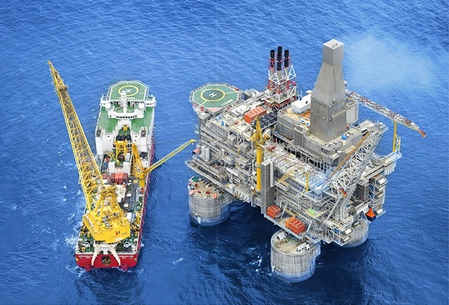
New Delhi, Feb 24 (IANS) India’s Africa policy is playing a key role in providing energy security, enhancing the country’s exports, and also fits into its strategic calculation for keeping the sea lanes safe for trade with the country’s naval presence in the Indian Ocean.
Within the big picture, India’s engagement with Nigeria and Mozambique offers a revealing window into how New Delhi is operationalising its Africa policy in practical terms, an article in India Narrative highlighted.
India is the world’s third-largest energy consumer and imports over 85 per cent of its crude oil requirements, so it is important to diversify the country’s oil purchases to cushion the domestic consumer from geopolitical uncertainties, it said.
Nigeria has been among India’s top five crude suppliers. At a time when supply disruptions in West Asia can transmit immediate price shocks, Nigeria’s light crude offers diversification not only in geography but in political risk. Even in recent years, despite fluctuations driven by global price shifts and freight economics, bilateral trade between India and Nigeria has hovered at $11–15 billion annually, with energy as the dominant component, the article, written by retired IFS officer Sanjay Kumar Verma, pointed out.
India, on its part, exports pharmaceuticals, machinery, transport equipment, plastics, and refined petroleum products to Nigeria. Indian pharmaceutical companies command a significant share of Nigeria’s generic medicine market, making India one of the most important sources of affordable healthcare supplies in West Africa. Indian companies have also cumulatively invested several billion dollars in Nigeria across sectors such as power generation, manufacturing, consumer goods, and services. Indian firms are among the largest employers in Nigeria’s organised private sector. Conservative estimates suggest that Indian enterprises have generated tens of thousands of direct and indirect jobs within Nigeria, the article observed.
Besides, Nigeria hosts a resident Indian community of approximately 50,000 people, including professionals, businesspersons, and long-term residents. There are also a large number of Nigerian students studying medicine, engineering, and management in Indian universities, which further strengthens the people-to-people contact between the two countries.
The article further states that while Nigeria represents the established pillar of India’s African energy engagement, Mozambique embodies its future-facing dimension.
The discovery of vast natural gas reserves in Mozambique’s Rovuma Basin, estimated at over 100 trillion cubic feet, has the potential to reshape global LNG markets. Indian public sector undertakings, including ONGC Videsh, Bharat Petroleum, and Oil India Limited, have collectively invested billions of dollars in offshore Area 1 projects. India’s financial exposure to Mozambican LNG ventures runs into several billion dollars, making it one of its most significant upstream energy investments in Africa. Equity participation in Mozambican projects allows India not only to secure future cargoes but also to hedge against market volatility.
Mozambique’s importance, however, extends well beyond hydrocarbons. Its long coastline along the Western Indian Ocean places it squarely within India’s expanding maritime horizon. Energy security and maritime strategy converge most visibly in the sea lanes that connect African production to Indian consumption. Tankers lifting crude from West African terminals and LNG carriers loading off the Mozambican coast traverse waters increasingly crowded by rival naval presences and exposed to piracy, insurgency spillovers, and strategic competition. Securing sea lanes of communication, enhancing maritime domain awareness, and strengthening capacity-building with littoral states are therefore extensions of energy policy by other means. India’s growing naval presence in the Western Indian Ocean is less a display of ambition than an exercise in economic prudence, the article observes.
“India is not merely buying oil from Nigeria or investing in gas in Mozambique. It is weaving itself into Africa’s energy geography while extending its maritime footprint across the Indian Ocean,” in order to anchor the country’s “strategic autonomy in an era where dependence is routinely weaponised,” the article observed.
–IANS
sps/vd