
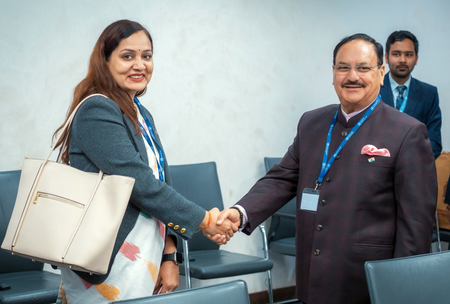
Geneva/New Delhi, May 19 (IANS) Union Health Minister J.P. Nadda on Tuesday reiterated India’s commitment to equitable healthcare, digital innovation, and international cooperation during the plenary session of the 79th World Health Assembly in Geneva.
The Assembly, themed “Reshaping Global Health: A Shared Responsibility”, provided a global platform for India to showcase its transformative health initiatives.
Speaking on behalf of the world’s largest democracy, Nadda highlighted that India’s progress towards Universal Health Coverage is anchored in a ‘whole-of-government’ and ‘whole-of-society’ approach.
“We are accelerating access to quality and affordable healthcare for all,” he declared, emphasising people-centric policies that leave no one behind.
The Minister informed the global gathering that India has operationalised over 1,85,000 Ayushman Arogya Mandirs across the country, delivering comprehensive primary healthcare services right at the community level.
These centres play a vital role in preventive care, early diagnosis, and treatment of common ailments, significantly reducing the burden on higher-level facilities.
Nadda gave special emphasis to digital health transformation through the Ayushman Bharat Digital Mission.
“This mission is strengthening India’s national digital health ecosystem by creating over 880 million unique digital health identities, which facilitate longitudinal health records and ensure a seamless continuum of care,” he noted.
This massive digital infrastructure enables better coordination between providers, improves patient outcomes, and supports data-driven policymaking.
On the financial protection front, the world’s largest public health assurance scheme, Ayushman Bharat Pradhan Mantri Jan Arogya Yojana, continues to shield nearly 600 million vulnerable beneficiaries from catastrophic health expenses.
The Minister also outlined India’s robust pandemic preparedness measures and ongoing efforts to build resilient public health infrastructure capable of handling future challenges.
Addressing emerging technologies, Nadda spoke about India’s recently launched Strategy for Artificial Intelligence in Healthcare.
He stressed that “the future of Artificial Intelligence depends on our collective ability to build ethical and human-centric systems”, calling for responsible innovation that prioritises patient safety and equity.
Reaffirming India’s position as the “Pharmacy of the World”, the Minister recalled the country’s pivotal role during the COVID-19 pandemic.
Under the “Vaccine Maitri” initiative, India supplied nearly 300 million vaccine doses to around 100 countries, demonstrating its unwavering commitment to global health solidarity.
Nadda urged the international community to convert shared responsibility into tangible impact.
“In the spirit of solidarity, let this Assembly move forward to transform policy into action for a healthier future for all,” he said.
India’s proactive stance at the Assembly underscores its growing leadership in shaping a more inclusive and resilient global health architecture.
–IANS
sktr/dan