

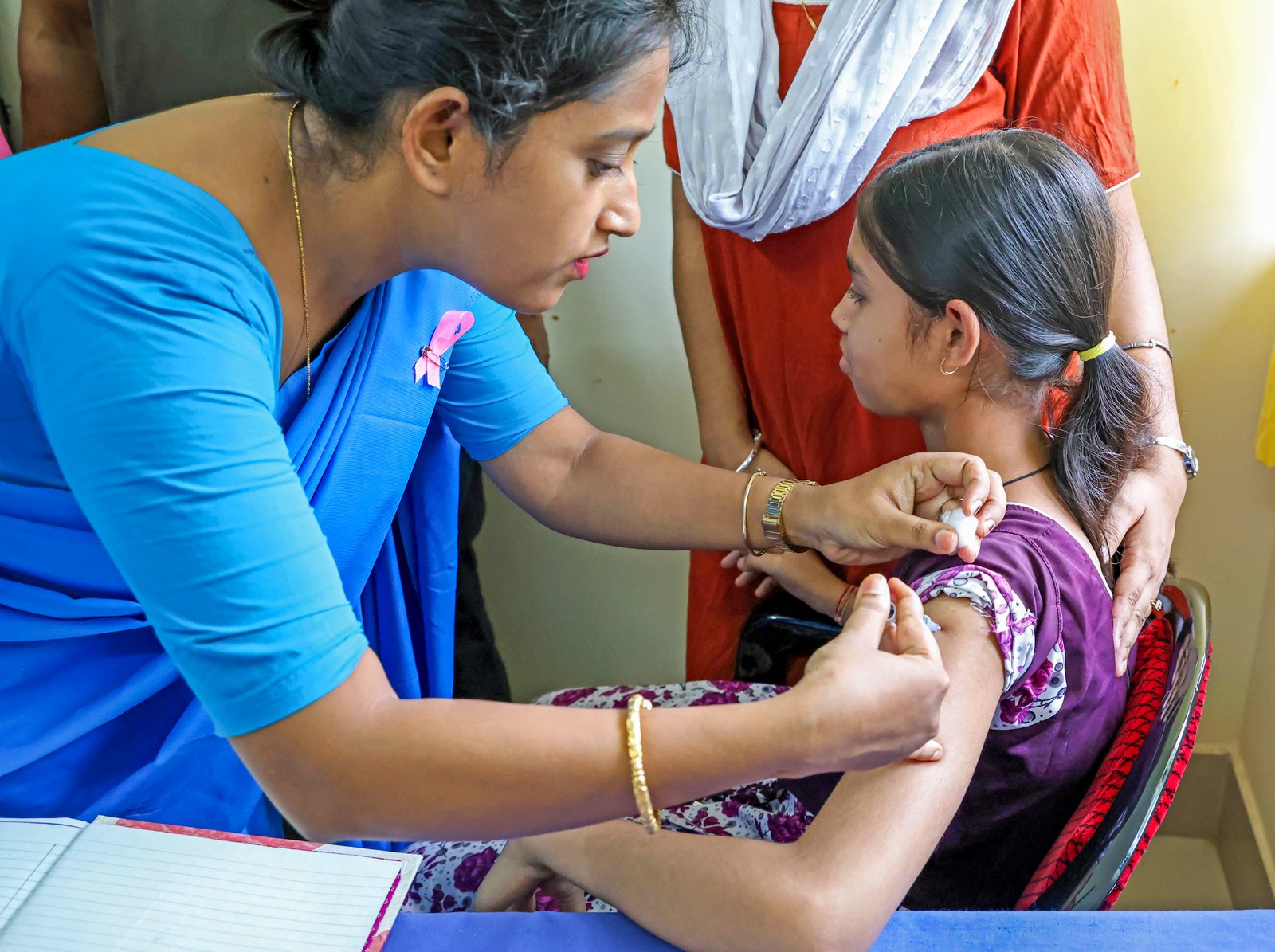

New Delhi, Nov 21 (IANS) India has administered over 1 crore doses under its National Human Papillomavirus (HPV) Vaccination Campaign within nine months of its launch, achieving nearly 87 per cent coverage based on the 2021 population estimate of the annual target cohort of about 1.2 crore 14-year-old girls, an official statement said on Saturday.
The Ministry of Health and Family Welfare said the milestone of the Nationwide HPV Vaccination Campaign reflects growing public confidence and strong centre-state coordination.
Six states — Gujarat, Uttar Pradesh, Andhra Pradesh, Mizoram, Madhya Pradesh and Bihar — have achieved 100 per cent coverage of their identified target populations. Assam recorded 95.63 per cent coverage, followed by Telangana at 95.28 per cent, Karnataka at 93.16 per cent and Uttarakhand at 90.17 per cent.
Chhattisgarh (86.21 per cent) and Rajasthan (85.23 per cent) have crossed the 80 per cent coverage mark, while Kerala (77.02 per cent), Tamil Nadu (76.12 per cent), Odisha (74.90 per cent) and the Union Territory of Dadra and Nagar Haveli and Daman and Diu (72.99 per cent) have achieved more than 70 per cent coverage.
In terms of absolute numbers, Uttar Pradesh leads the country with more than 29.33 lakh 14-year-old girls vaccinated, followed by Bihar with over 13.70 lakh and Gujarat with over 7.75 lakh girls vaccinated.
The campaign, launched by Prime Minister Narendra Modi in February 2026, provides free, safe and voluntary single-dose HPV vaccination, with parental consent, to 14-year-old girls at government health facilities.
The progress across states with diverse geographical, demographic and socioeconomic conditions highlights the extensive reach of the campaign and the effectiveness of locally adapted implementation strategies, the statement noted.
Healthcare professionals, including paediatricians, gynaecologists and specialists from premier medical institutions such as AIIMS, have played an important role in building awareness and addressing concerns regarding vaccine safety and effectiveness.
School teachers, accredited social health activists (ASHAs), auxiliary nurse midwives (ANMs) and other frontline healthcare workers have also worked closely with parents and communities to encourage informed participation and counter misinformation.
Digital health infrastructure, with the U-WIN platform, supported real-time monitoring, beneficiary tracking and digital vaccination records.
Programme managers are using the platform to monitor vaccination progress at the district level, identify coverage gaps and eligible girls yet to be vaccinated, and support more effective planning and resource allocation.
The platform also enables parents to book HPV vaccination slots for their daughters and download digital vaccination certificates, making the vaccination process more accessible, convenient and transparent.
—IANS
aar/na