
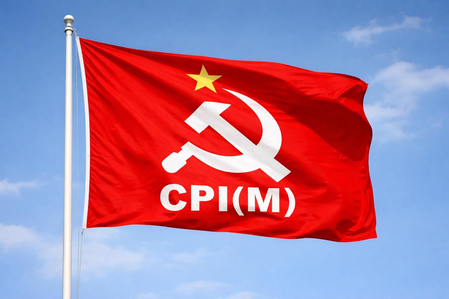
New Delhi, Feb 19 (IANS) Once considered an impregnable red bastion, West Bengal Communists’ representation in the Parliament has been witnessing a steady decline through time where the state’s Marxists will have zero representation, with the retirement of Communist Party of India-Marxist leader Bikash Ranjan Bhattacharyya by April this year.
As of now, neither the Lok Sabha, nor the West Bengal Assembly has any member from the Left Front from the state.
Therefore, from April this year, there will be no CPI-M MP from West Bengal in the Parliament, with the lone representative retiring.
However, there still will remain three CPI-M leaders from Kerala in the Upper House of Parliament and four in the Lok Sabha.
In the Lower House, one CPI-M member each is from Kerala and Rajasthan, while two are from Tamil Nadu.
This is now the strength of the CPI-M that led the Left alliance, once considered a formidable foe, and thus, a sought-after political ally in national politics.
In the Rajya Sabha earlier, between 1952 and the 1980s, the Communist Party of India (CPI), and later the CPI-M, maintained steady representation, often with a combined strength of 15-25 members.
This strength peaked between the 1990s and 2000s, rising to around 25 to 30 seats, reflecting strong bases in West Bengal, Kerala, and Tripura.
But 2010s onward, decline set in as the Left lost ground in state Assemblies; and by the mid-2020s, representation fell to single digits.
Among the best score in any Lok Sabha election, the Left parties together won more than 50 seats in 1971, with the CPI-M itself accounting for almost half of these.
The alliance maintained the score again in 1980 and 1989, reaching the peak of 60-plus in 1996 and 2004.
But in the 2024 Parliamentary polls, while the CPI-M won four, CPI was victorious in two, while other alliance partners failed to win a single seat.
Bhattacharyya is the current CPI-M member in the Rajya Sabha representing West Bengal. He was elected to the Upper House in April 2020, and is the party’s Parliamentary Party leader in the Rajya Sabha since July 2024.
Apart from Bhattacharyya, four Trinamool Congress MPs also retire from the Rajya Sabha this year. Of them, Mausam Noor recently returned to the Congress and vacated her seat in January this year.
From the Trinamool Congress, on-ground reports suggest the re-nomination of Subrata Bakshi, while those for Saket Gokhale and Ritabrata Banerjee are yet to be confirmed.
While this will mark the end of the first term for Bakshi and Gokhale, it was the second for Banerjee where he earlier represented the CPI-M in the Upper House.
The Bharatiya Janata Party (BJP), meanwhile, has two MPs – State party President Samik Bhattacharya and Nagendra Ray, who claims himself to be the descendant of the erstwhile ruler of Cooch Behar — in Rajya Sabha from West Bengal.
Given the current strength in West Bengal Assembly, the Trinamool Congress can re-send all its four MPs while the state’s principal Opposition BJP can elect one.
That leaves the other two major political parties — CPI-M and Congress, who have zero MLAs in the state Assembly, without any representation in the Upper House of Parliament from West Bengal.
However, the Congress did win one Lok Sabha seat from West Bengal in the 2024 general election.
–IANS
jb/khz