
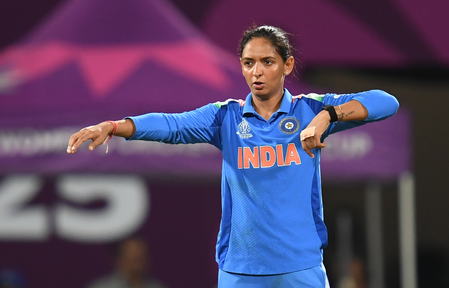
New Delhi, Jan 26 (IANS) Harmanpreet Kaur, captain of the Indian women’s cricket team, was announced as a Padma Shri awardee on Sunday, joining eight other current and former sportspersons on the 2026 Padma Awards list. This prestigious list includes five Padma Vibhushan, 13 Padma Bhushan, and 113 Padma Shri recipients.
Her achievement honours a career that has transformed Indian women’s cricket and altered the sport’s perception and play in the country. The 36-year-old’s journey in Indian cricket reflects courage, conviction, and a strong will to challenge norms.
Born on March 8, 1989, in Moga, Punjab, Harmanpreet was raised in a cricket environment where opportunities for women were scarce. Her initial coach was her father, a former volleyball and basketball player, and she started training early, frequently practising with boys to improve her skills and resilience.
Her early promise secured her a place in India’s domestic circuit, where her consistent performances quickly brought her national attention. Harmanpreet debuted internationally in 2009, but like many women cricketers of her time, her recognition was gradual.
Opportunities were scarce, exposure was limited, and financial backing was minimal. Nevertheless, she persisted, fueled by a bold batting style that distinguished her in a typically conservative environment.
Her career’s defining moment came at the 2017 Women’s ODI World Cup, when her unbeaten 171 against Australia in the semi-final transformed perceptions of Indian women’s cricket.
This innings was more than a personal achievement; it was a cultural milestone demonstrating power, determination, and confidence on the international stage. From then on, Harmanpreet emerged as the symbol of a new, more assertive Indian women’s team.
Leadership came instinctively. As captain across formats, Harmanpreet led India through a period of transition and development, focusing on aggression, fitness, and confidence.
In the 2023/24 season, India scripted history in the toughest format of the game as Harmanpreet led her side to emphatic Test victories against England and Australia at home, cementing the team’s dominance in red-ball cricket.
Under her leadership, India reached multiple ICC finals before finally clinching their maiden ICC title by winning the ODI World Cup at home, defeating South Africa by 52 runs at the DY Patil Stadium in Navi Mumbai. It was a historic achievement that cemented her legacy, ending a prolonged wait for the trophy.
Beyond numbers and trophies, Harmanpreet’s influence lies in how she transformed mindsets. She inspired a generation of young girls to see cricket as a viable career, not an exception. Her journey from small-town Punjab to lifting World Cup silverware reflects the evolution of women’s cricket in India itself, resilient, fearless, and finally, unapologetically ambitious.
She inspired several girls to take up the sport, particularly after the introduction of the Women’s Premier League in 2023. Her captaincy brilliance was further highlighted when she led her team, the Mumbai Indians, to two championship titles in the first three seasons.
The Padma Shri also recognises Harmanpreet’s role as a trailblazer off the field. From advocating professionalism to navigating the growing expectations that come with increased visibility, she has shouldered the role of standard-bearer for the sport in India. Her journey from small-town Punjab to the pinnacle of international cricket mirrors the broader evolution of women’s sport in the country.
In recognising Harmanpreet, the Padma Awards celebrate a legacy defined not only by success but also by change, a career that expanded possibilities and redefined what Indian women’s cricket could aspire to become.
–IANS
vi/