
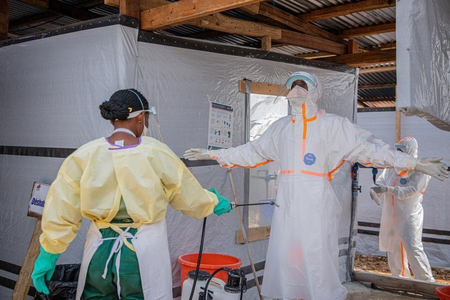
Kinshasa, July 9 (IANS) The death toll from the ongoing Ebola outbreak in the Democratic Republic of the Congo (DRC) has reached 600, with 1,759 confirmed cases reported, according to the country’s health authorities.
A total of 750 patients are currently in isolation or hospitalisation, with an overall bed occupancy rate of 94 per cent, health authorities said in an update released late Wednesday.
Caused by the Bundibugyo Ebola virus, the outbreak, declared on May 15, is the country’s 17th Ebola outbreak. It has affected 37 health zones in three provinces, namely Ituri, North Kivu, and South Kivu.
Response to the outbreak continues to face multiple constraints, including community resistance to post-mortem sampling, insufficient treatment capacity, gaps in contact tracing, limited supplies, insecurity and restricted access in areas affected by armed groups, Xinhua news agency reported.
The DRC declared the outbreak in mid-May. Health authorities and international partners have repeatedly warned that insecurity, population movement, pressure on health facilities, and incomplete contact tracing continue to complicate the response.
Ebola is a rare, severe, and often fatal disease caused by a virus. The virus is transmitted to humans from wild animals (like fruit bats) and spreads through direct contact with infected bodily fluids. It is characterized by the sudden onset of flu-like symptoms, fever, and can lead to organ failure.
An Ebola outbreak was confirmed in the Democratic Republic of the Congo and in Uganda in May 2026. The Bundibugyo species of Ebola involved is one for which there is no vaccine or specific treatment, though work is ongoing to test promising candidates. The outbreak is occurring in a challenging context: humanitarian crisis and a remote and densely populated area, combined with insecurity and high population and trade movements.
Symptoms typically appear 2 to 21 days after exposure and include sudden fever, fatigue, muscle pain, severe headache, sore throat, vomiting, diarrhea, abdominal pain, and unexplained bleeding or bruising in severe cases.
The World Health Organization (WHO) declared this outbreak a Public Health Emergency of International Concern.
–IANS
jk/