
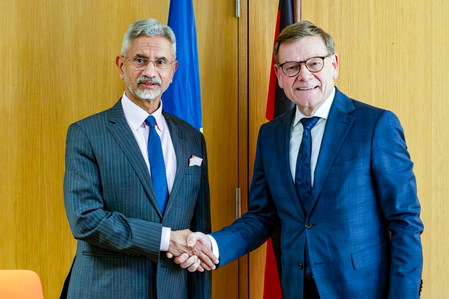
New Delhi, March 23 (IANS) External Affairs Minister (EAM) S. Jaishankar on Monday said he held a conversation with his German counterpart Johann Wadephul on the ongoing West Asia conflict, which has now entered its fourth week, with both sides agreeing to stay in close contact amid evolving developments.
Sharing details of the interaction on X, EAM Jaishankar said, “A useful conversation yesterday night with German FM Johann Wadephul on the West Asia conflict. Agreed to remain in touch.”
The latest exchange comes amid a series of diplomatic engagements between the two leaders in recent weeks.
On March 16, EAM Jaishankar met Wadephul in person in Brussels, where they held what he described as a “valuable exchange of notes on the conflict in West Asia,” while also reviewing various aspects of bilateral cooperation.
Earlier, on March 10, the two ministers had also discussed the situation in West Asia as part of continued consultations, reflecting growing international concern over the conflict’s impact on energy security and regional stability.
EAM Jaishankar has, in recent weeks, remained actively engaged with several global counterparts as tensions continue to escalate in the region. His outreach has included multiple discussions with key stakeholders, including Abbas Araghchi, focusing on the latest developments and broader regional implications.
In addition to Iran, the External Affairs Minister has maintained communication with foreign ministers from several Gulf nations, underlining India’s efforts to remain diplomatically engaged with all sides involved in the crisis.
The conflict in West Asia started following the February 28 strikes carried out by the United States and Israel on Tehran, which resulted in the killing of Iran’s Supreme Leader Ayatollah Ali Khamenei.
The situation has since widened, drawing in multiple countries across the Gulf region and raising concerns over key strategic corridors such as the Strait of Hormuz.
India’s approach to the crisis has reflected a calibrated and balanced diplomatic strategy, with its leadership maintaining engagement with all regional actors since February 28, signalling a consistent effort to navigate the crisis without aligning with any particular side.
–IANS
sd/