
New Delhi/Jammu, Oct 14 (IANS) As temples across the country witnessed large gatherings on Wednesday, the fourth day of Navratri dedicated to Maa Kushmanda, hundreds of devotees visited the historic Tali Wali Mata Mandir in J&K’s Marh near the Pakistan border to offer prayers.
Devotees were also seen singing bhajans and playing musical instruments at the temple in Jammu district.
Speaking to IANS, a young devotee said that the voices of people chanting slogans at the temple could be heard all the way to the Pakistan border. She said a large number of devotees were visiting the temple during Navratri, and the crowd was expected to grow further on the ninth day.
She added that people travelled from far-off places to visit the shrine. Despite the firing and bombings during Operation Sindoor, launched in response to the Pahalgam terror attack, the temple had not suffered any damage, she said.
“The temple is very renowned. People from far-off places visit it. Even soldiers deployed at the border sometimes come here to offer prayers,” she said.
Another devotee said many BSF personnel visited the temple to seek the Goddess’s blessings. “People from Jammu city and Nagrota also came to the shrine”, she added.
She said the sound of bhajans and devotional chants reached across the border, adding that people from different religious communities visited the temple and participated in its service.
Meanwhile, in Madhya Pradesh’s Dewas, thousands of devotees gathered at the Chamunda Mata Temple on the fourth day of Navratri to offer prayers during the morning aarti. Some devotees were seen crawling on their knees to fulfil their vows.
Temple priest Suresh Nath said the Goddess was worshipped as Maa Kushmanda on the fourth day of Navratri. According to local religious belief, the deity is also known as Raktavahini Chamunda because the Goddess’s blood is believed to have fallen at the site.
He said the Goddess was believed to assume different forms throughout the day – appearing childlike during the day, youthful in the afternoon, and elderly at night.
“In three to four days, nearly four to five lakh people have visited the temple,” the priest said.
He also spoke about villages located near the zero point in the area, saying residents believed they could live without fear even during firing or military operations because the Goddess was protecting them.
In New Delhi, devotees continued to visit the Kalkaji Temple, where special arrangements had been made to manage the crowds during Navratri.
Mahant Surendranath Avdhut said some devotees visited the temple on all nine days of the festival. He added that the Goddess was worshipped at midnight during Navratri, and the temple doors were opened for devotees.
The temple had arranged three entry points and two exit points to ensure the smooth movement of worshippers. An outpost had also been set up within the temple premises to enable police personnel, paramilitary forces and volunteers to assist devotees.
Devotees also visited the revered Maa Vindhyavasini Temple in Uttar Pradesh’s Mirzapur to offer prayers.
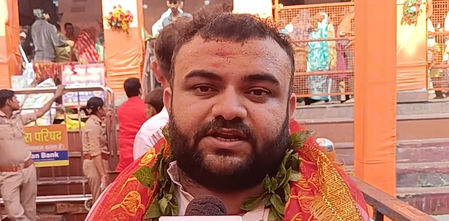
Speaking to IANS, Avinash Singh, who had travelled from Ranchi, said the arrangements at the temple were good and that he had faced no hassle or rush during darshan.
Another devotee, Manish Kumar Dubey, said he visited the temple every Tuesday and throughout the nine days of Navratri.
Describing his experience, he said, “I felt as if I was sitting in Mother’s lap and being blessed.”
–IANS
sud/vd