
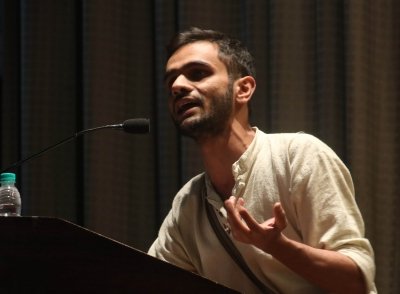
New Delhi, July 4 (IANS) A Delhi court on Saturday dismissed the regular bail pleas of Umar Khalid and Sharjeel Imam in the larger conspiracy case linked to the 2020 northeast Delhi riots, holding that it was bound by the Supreme Court’s earlier order declining them bail and that their fresh applications were not maintainable.
Additional Sessions Judge Sameer Bajpai of the Karkardooma Court rejected the applications filed by Khalid and Imam under Section 483 of the Bharatiya Nagarik Suraksha Sanhita (BNSS) read with Section 43D(5) of the Unlawful Activities (Prevention) Act (UAPA).
“The Court has no option but to follow the judgment dated 05.01.2026, as passed by the Hon’ble Supreme Court, whereby the petitions of both the applicants were dismissed,” ASJ Bajpai said.
The court further observed that the Supreme Court had made it clear that the applicants would be at liberty to renew their prayer for bail only after the examination of the protected witnesses relied upon by the prosecution or on the expiry of one year from its January 5 order, whichever was earlier.
“Thus, following the said order of the Hon’ble Supreme Court, this Court cannot entertain the applications and grant bail to the applicants. In fact, the applications are not maintainable and they are hereby dismissed,” the court said.
During the hearing, counsel for the two accused argued that there had been a change in circumstances after the Supreme Court’s January 5 judgment refusing them bail while granting relief to five co-accused — Gulfisha Fatima, Meeran Haider, Shifa Ur Rehman, Mohd Saleem Khan and Shadab Ahmed.
The defence relied on the subsequent apex court judgment in Syed Iftikhar Andrabi vs National Investigation Agency, contending that it expressed serious reservations over the manner in which the earlier ruling in Gulfisha Fatima vs State (Govt. of NCT of Delhi) had applied the three-judge Bench decision in Union of India vs K.A. Najeeb.
The defence also referred to the Supreme Court’s recent order granting six months’ interim bail to co-accused Tasleem Ahmed and Khalid Saifi after noticing the divergence between the Gulfisha Fatima and Syed Iftikhar Andrabi judgments and referring the legal issue to a larger Bench.
Counsel for Umar Khalid additionally relied upon a recent Delhi High Court judgment granting bail to Khurram Parvez on the ground of prolonged incarceration, submitting that Khalid had spent more than six years in custody.
The defence urged the trial court to grant regular bail or, in the alternative, interim bail for six months on the same lines as granted to Tasleem Ahmed and Khalid Saifi.
Opposing the pleas, the prosecution argued that the Supreme Court had already rejected the bail petitions of both applicants and had also dismissed Umar Khalid’s review petition in April this year.
It contended that there had been no substantial change in circumstances warranting reconsideration of the issue by the trial court. Accepting the prosecution’s submissions, the court said it could not examine whether there had been any change in circumstances as the issue arising from the divergent Supreme Court judgments had already been referred to a larger Bench.
“Unless the issue is settled, the Court cannot consider the present applications on any ground,” the order said.
The case relates to the alleged larger conspiracy behind the communal violence that broke out in northeast Delhi in February 2020. Khalid and Imam are among several accused booked under the UAPA and other penal provisions. Earlier this year, the Supreme Court dismissed the bail pleas of Khalid and Imam, holding that the prosecution material disclosed prima facie grounds attracting the statutory embargo on the grant of bail under Section 43D(5) of the UAPA. At the same time, it granted bail to five co-accused in the case.
More recently, the apex court granted six months’ interim bail to Tasleem Ahmed and Khalid Saifi while referring to a larger Bench the question of whether prolonged incarceration and delay in trial can justify the grant of bail despite the restrictions under Section 43D(5) of the UAPA.
–IANS
pds/pgh