
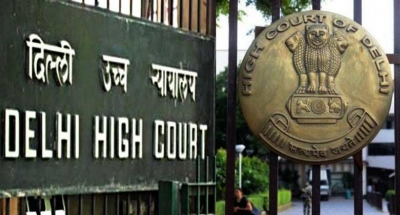
New Delhi, May 21 (IANS) The Delhi High Court has directed the city government to evolve a mechanism for identifying eligible ration card beneficiaries without insisting that daily wage earners furnish family income certificates for availing benefits under the public distribution system.
A bench of Chief Justice Devendra Kumar Upadhyaya and Justice Tejas Karia passed the direction while disposing of a public interest litigation (PIL) raising concerns over duplicate ration card beneficiaries, non-eKYC entries, and denial of food security benefits to genuine applicants.
“We direct the state government to evolve a mechanism for identification of the beneficiaries and, accordingly, issue appropriate directions for issuance of the ration cards only in case the beneficiaries are daily wage earners and not to insist on them to produce the family income certificate,” the Delhi High Court said in its order passed on Wednesday.
The CJ Upadhyaya-led Bench further observed that any other mechanism could also be evolved by the authorities to ascertain the family income of daily wage earners by utilising government officials and resources.
The exercise has to be completed within three months.
The PIL, filed by Aakash Goel, raised concerns over duplicate and ineligible ration card beneficiaries, as well as exclusion of genuine applicants due to administrative inefficiencies and policy barriers.
One of the grievances highlighted was the presence of “duplicate beneficiaries and non-eKYC beneficiaries” in the system, along with the issuance of ration cards to ineligible persons. The plea also sought directions for allocation of ration cards to 17,20,653 approved beneficiaries and compliance with Supreme Court orders relating to issuance of ration cards to eligible e-Shram registrants without being constrained by statutory caps under the National Food Security Act, 2013.
The Delhi High Court recorded that the petitioner had raised grievances regarding duplicate beneficiaries, non-eKYC beneficiaries and issuance of ration cards to allegedly ineligible persons. “One of the grievances raised is that there are a certain number of duplicate beneficiaries and non-eKYC beneficiaries, and further, certain persons have been issued ration cards who are ineligible,” the order said.
The bench permitted the petitioner to submit a fresh representation before the Principal Secretary, Department of Food, Supplies and Consumer Affairs, within two weeks, along with all supporting documents. It directed the Delhi government to appropriately examine the issues raised in the representation and take a decision “with expedition”.
“Once any such representation is made, the issues which may be raised shall be appropriately attended to by the state government and decision… shall also be taken, with expedition,” the order stated.
The plea had challenged the requirement under the Delhi Food Security Rules, 2026, mandating submission of family income certificates while applying for ration cards.
During the hearing, advocate Kumar Utkarsh referred to guidelines issued by the Central government on July 8, 2025, under which state governments were asked to undertake field verification and “data cleansing” of ration card databases wherever ineligibility was established, with the exercise to be completed by September 30, 2025.
Referring to the guidelines, the Delhi High Court observed that the responsibility for the identification of beneficiaries rests with the state government and that family income could also be ascertained during such verification exercises.
The petition alleged that lakhs of economically vulnerable residents in Delhi continued to be deprived of food security benefits due to administrative inaction and arbitrary policy barriers.
Citing official data, the plea alleged that the database includes thousands of duplicate entries and over 12 lakh beneficiaries who have not completed mandatory e-KYC, leading to diversion of resources meant for the poor. The petition further claimed that around 19.71 lakh potentially purgeable entries existed in the Delhi ration database across duplicate, non-eKYC and “rich/ineligible” categories, constituting nearly 27 per cent of Delhi’s total NFSA allocation capacity of approximately 72.77 lakh beneficiaries.
It also referred to a Supreme Court order dated April 20, 2023, passed in a suo motu matter directing states to issue ration cards to e-Shram registrants outside the statutory cap.
Apart from lawyer Kumar Utkarsh, advocates Manoj Kumar and Devesh Pal appeared on behalf of the petitioner before the Delhi High Court.
–IANS
pds/vd