
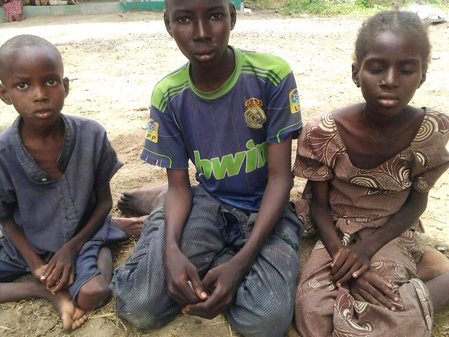
United Nations, May 23 (IANS) Millions of people across Nigeria are bracing for one of the worst lean seasons on record amid conflict, violence and insecurity, UN humanitarians have said.
In a news release on Friday (Local time), the UN Office for the Coordination of Humanitarian Affairs (OCHA) said that economic pressures and unprecedented funding constraints are pushing Nigerian families to the brink.
The UN Humanitarian Country Team in Nigeria reported that nearly one in seven people, or 35 million people nationwide, are likely to face acute food insecurity during this year’s lean season from June to August, said the office.
“This makes Nigeria one of the world’s largest hunger crises, with the burden falling overwhelmingly on northern Nigeria,” it said. “If assistance is further delayed, millions of families will be forced to further reduce meals, sell assets and withdraw their children from school.”
OCHA said that acute malnutrition is also projected to peak, placing millions of children at risk. Across northwest and northeast Nigeria, it is estimated that 6.4 million children are likely to be acutely malnourished this year, reports Xinhua news agency.
The United Nations and its humanitarian partners are appealing for urgent funding to scale up life-saving assistance.
“Resources from the Nigeria Humanitarian Fund have jump-started the response, but more is needed to meet immediate life-saving humanitarian needs,” OCHA said. “The already hyper-prioritised 516 million US dollar Humanitarian Needs and Response Plan is just over 40 per cent funded, with 215 million dollars received.”
Earlier this month, UN Secretary-General Antonio Guterres called on the international community to act swiftly to address the conflicts and climate shocks affecting African nations.
Guterres highlighted that Africa’s path to a peaceful and prosperous future is severely hindered by conflict, climate-induced emergencies, and imbalances in the multilateral system.
“No discussion of Africa’s future can ignore the conflicts causing so much suffering across the continent,” Guterres told journalists in Nairobi, the Kenyan capital, calling for the immediate cessation of hostilities in Sudan, eastern Democratic Republic of the Congo, and South Sudan.
Guterres warned that terrorism, climate stress, hunger, and poverty are devastating the Sahel region, stressing that lasting peace requires dialogue, international cooperation, and stronger local institutions.
Guterres also highlighted how conflicts in the Middle East and the closure of the Strait of Hormuz directly threaten African stability, noting that 13 per cent of the continent’s imports — mainly oil and fertilisers — pass through this vital waterway.
He said four in five African countries are net oil importers, and any prolonged disruption to global supply chains would severely worsen their economic vulnerability.
“That is why de-escalation is urgent. Navigational rights and freedoms must be restored. The Strait of Hormuz must reopen fully and safely. All parties must refrain from any action that could widen the conflict, and diplomacy must be given every chance,” Guterres said.
He said the UN is deepening its engagement with Africa amid growing turbulence in the international order to advance peace, sustainable development, and climate justice.
Guterres criticised the exclusion of Africa from a permanent seat on the UN Security Council, adding that the UN will continue to push for a fairer international system that gives Africa a stronger voice, more resources, and more equitable representation.
–IANS
sd/