
New Delhi, Oct 26 (IANS) Prime Minister Narendra Modi on Monday highlighted that India’s infrastructure planning has, in recent years, transitioned from individual projects into a more integrated people-centric approach aimed at better connectivity, ease of living and higher economic growth under the PM Gati Shakti model.
PM Modi shared an article on X, written by NITI Aayog member and former Cabinet Secretary, Rajiv Gauba, which underscores that the Prime Minister’s 25 years in public office have reshaped how infrastructure is planned and delivered. The article highlights that moving beyond individual projects, the focus is on an integrated, citizen-centric approach that improves connectivity, ease of living, and economic productivity.
The article states that there is a fundamental difference between the coordination that governments have traditionally practised and PM Modi’s Gati Shakti approach. Instead of discovering interdependencies when they spark a conflict on the ground, planners now identify them while projects are still on the drawing board.
“Before a road is designed, what else is slated for that corridor? If a port is meant to serve a wider region, how will its hinterland be connected, and can these investments be sequenced so that one is ready the moment the other goes live? The Gati Shakti approach helped discover such interdependencies and mitigate conflicts, which helped plan projects in such a way that it optimised the costs”, according to the article.
In over 25 years in public life, first as Gujarat chief minister and then Prime Minister, Narendra Modi has led a major expansion of infrastructure. The transformation of Gujarat’s infrastructure during his tenure as CM is an important part of the state’s development story. At the national level, too, the transformation has been truly momentous.
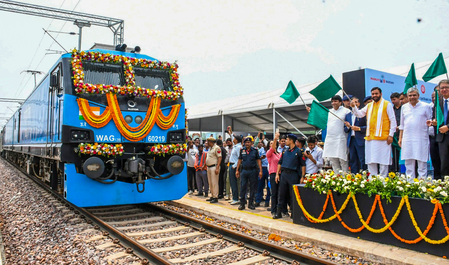
India’s airport network has more than doubled. The railway system has seen major expansion and modernisation — from dedicated freight corridors and electrification to the high-quality experience offered by Vande Bharat trains and redeveloped railway stations. National highways have expanded substantially, and new expressways, ports and metro systems have transformed the country’s connectivity landscape, the article further states.
While these changes have rightly attracted considerable attention, a more fundamental change that Modi’s governance brought about is the paradigm shift in how infrastructure is conceptualised, planned and delivered.
Previously, infrastructure creation was approached in a piecemeal manner, with a ministry, department or agency responsible for individual projects. Citizens or businesses, however, do not experience infrastructure along departmental lines.
“A person commuting to work, a farmer transporting crops to a mandi, or a manufacturer managing a supply chain relies on roads, railways, ports, water, and power as an integrated system. When even one link in this chain is weak or missing, the return on every other investment and ease of living suffers. Rather than looking at infrastructure solely through the lens of the department responsible for delivering a particular asset, PM Modi focuses on the larger outcome it is meant to achieve. This outcome-oriented, citizen-centric perspective has been a hallmark of his approach to administration,” the article added.
–IANS
sps/na