
United Nations, Oct 20 (IANS) India has asked countries to ensure that weaponisable sensitive technology is not transferred to countries like Pakistan that have terrorism links.
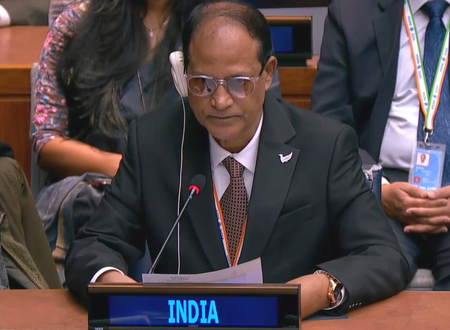
“India is deeply concerned about the risk of weapons of mass destruction falling into the hands of terrorists and non-state actors”, Janata Dal (United) MP Alok Kumar Suman told the General Assembly’s First Committee on Monday.
Without naming Pakistan, but making clear the reference was to it, he said, “We encourage all member states to remain vigilant about the transfer or devolution of sensitive technology, particularly to those with a record of proliferation or link to terrorism”.
Islamabad’s links to terrorism are well established through its sponsorship of terrorist organisations like Lashkar-e-Tayyiba and Jaish-e-Mohammed, and the protection it gave al-Qaeda head Osama bin Laden.
Suman, who represents Bihar’s Gopalganj constituency, is in the second contingent of the MPs in India’s delegation to the UN.
He reminded the committee that deals with the proliferation of nuclear and other weapons of mass destruction that starting 2002 India has introduced a resolution titled “Measures to Prevent Terrorists from the Acquiring Weapons of Mass Destruction”.
The resolution adopted unanimously “calls upon all member states to support international efforts to prevent terrorists from acquiring weapons of mass destruction and their means of delivery”.
To ensure that, it “urges all member states to take and strengthen national measures, as
appropriate, to prevent terrorists from acquiring weapons of mass destruction, their means of delivery and materials and technologies related to their manufacture”.
Suman said that India supported adapting the Chemical Weapons Convention to ensure its verification rules take into account the growing threat of “non-state actors” – terrorists – getting them.
About India’s efforts to promote international cooperation on this front, Suman said it had convened an international conference in New Delhi in December to mark the 50th anniversary of the Biological Weapons Convention.
The treaty bans the development, production, stockpiling, and transfer of biological weapons.
The conference, with the participation of 80 countries, he said, “demonstrated India’s capacity in biosecurity and public health, and underlined the role the Global South must play in shaping the convention over the next 50 years”.
–IANS
al/rs