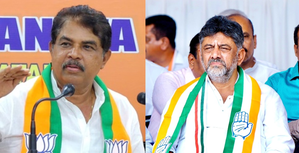


Bengaluru: Legislative Council member Dr C T Ravi has called for a balanced approach to the Kasturirangan report, saying protection of the Western Ghats must go hand in hand with safeguarding the livelihoods of people living in the region.
Speaking during a special session of the Legislative Council, Ravi said the issue should be viewed objectively, without political differences, and urged both the government and opposition to work together in the interests of the environment and local communities.
Gadgil, Kasturirangan reports
Ravi recalled that the Gadgil Committee had proposed dividing the Western Ghats into three ecological zones. Following objections from states, the Centre constituted the Kasturirangan Committee in 2012, which submitted its report in 2013.

He said the report proposed declaring around 60,000 sq km of the Western Ghats as an Ecologically Sensitive Area (ESA). Ravi raised concerns over the use of satellite and aerial surveys to identify areas, saying agricultural land, plantations and settlements could potentially be included in natural landscapes.
‘Conduct village-level physical survey’
Ravi called for a physical survey of every village and survey number covered by the proposed ESA. He suggested a joint team of officials from the Revenue, Forest and Panchayat Raj departments to separately identify reserve forests, private forests, revenue land, agricultural areas, plantations and settlements.
He also proposed preparing individual maps for each village and displaying them at Gram Panchayat offices. The maps, he said, should be submitted to the Centre only after inviting public objections and obtaining Gram Sabha approval.
Clarification sought on 10-km buffer
Ravi also sought clarity on reports of a proposed 10-km buffer zone around the Western Ghats, asking whether such a provision actually exists in the Kasturirangan recommendations and what stand the state government has taken.
He said the cultural landscape should be demarcated without adversely affecting roads, agriculture, housing or essential infrastructure, and urged authorities to consider the needs of communities over the next 100 years.
Four measures suggested
Ravi suggested four steps to address public concerns: seeking a stay on the existing notification, conducting a physical survey based on the Kerala model, separately demarcating natural and cultural zones, and issuing clear guidelines on permitted and restricted activities in cultural areas.
“Both the environment and people’s livelihoods must be preserved. A middle path that strikes a balance between the two must be adopted,” Ravi said.