

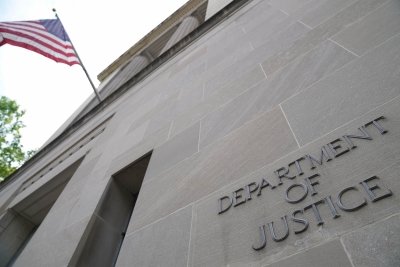
Washington, Sep 2 (IANS) The US Justice Department has said that every agency in states receiving federal welfare funds must report people known to be unlawfully present in the country to immigration authorities, reversing a narrower Clinton-era interpretation of the law.
The department’s Office of Legal Counsel said the requirement applies to states participating in Temporary Assistance for Needy Families, known as TANF, and Supplemental Security Income, or SSI.
Under the new interpretation, the reporting obligation applies to the entire state government — not only the agencies directly administering the two benefit programmes.
All 50 states, the District of Columbia and several US territories participate in TANF and SSI.
Federal TANF grants exceed $16.4 billion annually, according to the department.
The Justice Department said states that fail to comply could face consequences, including the possible loss of programme funding.
“Congress wrote this requirement plainly,” Assistant Attorney General T. Elliot Gaiser of the Office of Legal Counsel said.
“When a state chooses to participate in TANF, it accepts the obligation to report illegal aliens in the United States,” he added.
“Tax dollars intended to help vulnerable Americans should not perversely encourage illegal entry into the United States, but rather should reinforce our laws and our borders,” Gaiser said.
The department withdrew a 1998 Office of Legal Counsel opinion issued during the Clinton administration. That opinion interpreted the reporting requirement more narrowly, limiting it to the specific state agencies administering TANF or SSI.
The new legal opinion, dated September 1, said Congress broadly defined a “State” in the Personal Responsibility and Work Opportunity Reconciliation Act of 1996.
The department said accepting federal TANF or SSI funds therefore binds the entire state government, including its component agencies, to share information with the Department of Homeland Security (DHS) about people it knows are not lawfully present.
“Our clarification does not impose new obligations on states,” said Deputy Assistant Attorney General Joshua Craddock, who wrote the opinion.
“It simply restores the original meaning of the statute Congress enacted and ensures that DHS receives the information it is legally entitled to,” he added.
“States that accept TANF funding must abide by federal law, and failure to comply may lead to serious consequences, including loss of program funding,” Craddock said.
The opinion will apply prospectively, meaning states will not face penalties for actions taken while relying on the 1998 interpretation.
Federal agencies may now revise TANF and SSI grant agreements and compliance procedures to reflect the broader reporting standard, the department said.
TANF provides federal grants to states to support programmes assisting low-income families with children. States have broad discretion over how those funds are administered within federal requirements.
SSI is a federal programme providing monthly payments to eligible people with limited income and resources who are aged, blind or have disabilities.
The Social Security Administration administers the programme, while states may provide supplementary payments and perform related functions.
–IANS
int/lkj/khz