
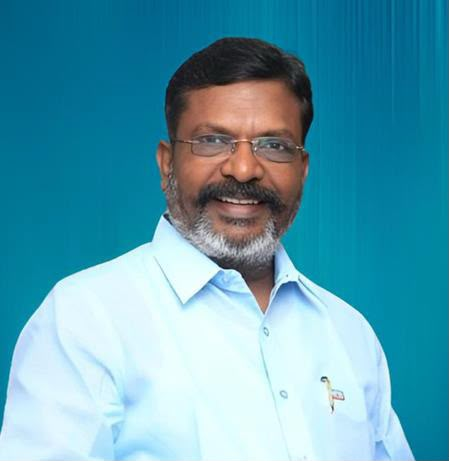
Chennai, Aug 2 (IANS) Viduthalai Chiruthaigal Katchi (VCK) President Thol. Thirumavalavan said on Sunday that India’s Gen Z is emerging as a powerful and unpredictable political force, with its unconventional methods of mobilisation and protest challenging traditional political strategies and compelling governments to respond.
Speaking at a programme, Thirumavalavan added that it was becoming increasingly difficult for political parties and leaders to anticipate what young people wanted and the kind of social and political changes they expected.
The attitudes, priorities and methods adopted by the younger generation were markedly different from those associated with conventional political movements, the VCK President said.
Referring to recent youth-led protests, the VCK leader added that large numbers of young people had mobilised and succeeded in putting pressure on the Union government.
He noted that campaigns driven by young activists, particularly through social media and other digital platforms, had demonstrated a capacity to build momentum rapidly and take political establishments by surprise.
Thirumavalavan said traditional opposition parties, including the Congress and the Communist parties, had organised several protests on major public issues over the years.
However, he added that the latest generation of protesters had shown that decentralised mobilisation, online campaigns and unconventional forms of agitation could sometimes produce political results more quickly than established methods.
He cited the resignation of former Union Minister Dharmendra Pradhan as an example, claiming that sustained pressure generated by the younger generation had played a significant role in forcing political action.
Had the issue been pursued solely through conventional party-led demonstrations, such a swift response might not have materialised, the VCK President said.
According to Thirumavalavan, the development also underlined the growing influence of the internet on contemporary politics.
Unlike earlier generations that largely depended on political parties, student organisations and established leadership structures to organise protests, Gen Z could communicate, mobilise and amplify issues almost instantaneously through digital networks.
The VCK Chief said that these emerging forms of political participation were capable of unsettling governments because they did not necessarily follow familiar ideological or organisational patterns.
This also made it difficult for conventional political parties to predict the direction in which youth sentiment would move, he added.
Thirumavalavan said that political organisations would have to understand the aspirations and changing methods of the younger generation, saying that Gen Z could increasingly influence public discourse, electoral politics and the broader political direction of the country in the years ahead.
–IANS
aal/khz