

Kathmandu, July 25 (IANS) Nepal’s exports reached a record high in fiscal year 2025-26, which ended in mid-July, but the country’s export success is becoming increasingly dependent on a narrow range of products and a single market — India.
According to the annual foreign trade statistics released by the Department of Customs this week, Nepal’s merchandise exports rose 13.8 per cent to NPR 315.29 billion, a record high. However, behind that growth lies a striking concentration of both products and export destinations.
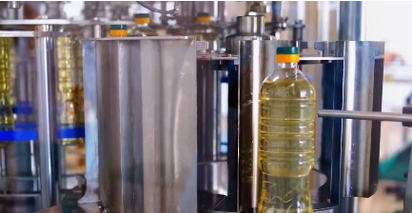
Refined soybean oil remained by far Nepal’s largest export, earning NPR 128.74 billion and accounting for 40.8 per cent of total merchandise exports.
When other edible oil products are included, exports of goods categorized under animal and vegetable fats and oils reached NPR 148.98 billion, accounting for 47.3 per cent of Nepal’s total exports. In effect, nearly one out of every two export rupees earned by the country came from edible oils. Almost all of the refined edible oil is sold in the Indian market.
Nepal’s refined cooking oil industry depends on imported crude edible oil, most of which is imported from Argentina and other South American countries before being processed and exported to India with value added in Nepal. As Nepal does not have large-scale commercial soybean farming, refined soybean oil is largely imported, suggesting that the country’s largest export industry relies heavily on imported raw materials.
Besides the concentration of products, Nepal’s overall exports are also heavily dependent on India. In fiscal year 2025-26, exports to India climbed to NPR 258.65 billion, accounting for 82 per cent of Nepal’s total merchandise exports.
“Such a concentration of products and markets is definitely a risk for Nepal’s export industry,” trade expert Rabin Sainju told IANS. “Nepal’s exports basically depend on Indian government policy.”
There is growing pressure on the Indian government from India’s edible oil industry to intervene against Nepal’s rapidly increasing exports of refined edible oil.
Earlier this week, the Indian Vegetable Oil Producers’ Association (IVPA) called on the Indian government to take action against what it described as an “unprecedented surge” in duty-free refined edible oil imports from Nepal under the South Asian Free Trade Area (SAFTA) framework.
Under the SAFTA framework, eligible Nepali products can be exported to the Indian market duty-free.
The IVPA said the increase marked a significant structural shift in India’s edible oil trade and warranted policy attention to ensure that trade, tariff, and domestic value-addition objectives remain aligned.
The association also urged the Indian government to verify whether Nepal’s exports comply with SAFTA’s Rules of Origin, citing Nepal’s limited domestic production of soybean and palm oil.
Sainju said Nepal needs to increase domestic value addition to ensure the long-term sustainability of its edible oil industry.
According to the Department of Customs, Nepal imported NPR 132.77 billion worth of crude soybean oil during the fiscal year before processing and exporting the refined products, primarily to India.
Besides edible oils, Nepal also exported electricity worth NPR 29.32 billion to India and Bangladesh, although Bangladesh accounted for only a small share of those exports.
India was also Nepal’s largest source of imports in fiscal year 2025-26, with imports totaling NPR 1.210 trillion. Nepal’s total imports during the fiscal year stood at NPR 2.096 trillion.
Meanwhile, exports to China fell 28 per cent to just NPR 1.89 billion, while imports from China increased 24.7 percent to NPR 425.25 billion. As a result, Nepal’s trade deficit with China widened to NPR 423.35 billion.
For every NPR 1 Nepal exported to China, it imported approximately NPR 225 worth of Chinese goods.
Trade with the United Arab Emirates also weakened as imports of gold and other precious metals increased sharply.
–IANS
scor/as