

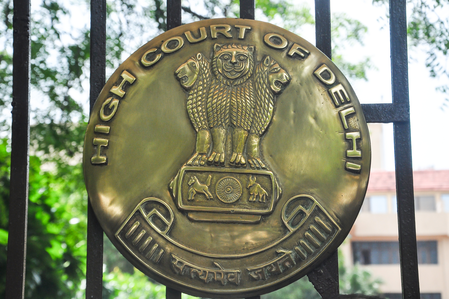
New Delhi, July 23 (IANS) After Prime Minister Narendra Modi’s announcement on setting up fast-track courts to ensure swift and stringent punishment in paper leak cases, the Delhi High Court on Thursday constituted a specially designated Fast Track Court to exclusively try offences under the Public Examinations (Prevention of Unfair Means) Act, 2024, and connected cases.
In an order issued by the Registrar General, the Delhi High Court said that Chief Justice D.K. Upadhyaya has ordered the posting of judicial officer Anu Grover Baliga as Special CBI Judge (Prevention of Corruption Act) in the newly created specially designated Fast Track Court at the Rouse Avenue Courts Complex.
The court will exclusively try offences under the Public Examinations (Prevention of Unfair Means) Act, 2024, along with connected offences.
The Delhi High Court also directed that the newly designated court would function under the administrative control of the Principal District and Sessions Judge-cum-Special CBI Judge (Prevention of Corruption Act) at the Rouse Avenue Courts Complex.
It also ordered the transfer of all pending cases registered under the Public Examinations (Prevention of Unfair Means) Act, 2024, and connected offences to the newly created Fast Track Court with immediate effect.
The development came hours after Prime Minister Modi announced that the Centre had decided to establish fast-track courts to ensure speedy justice and stringent punishment for those involved in examination paper leak cases.
In a post on social media platform X, the Prime Minister said: “Nothing is more important than the welfare and future of our youth! We have decided to set up fast-track courts to ensure swift and stringent punishment for those involved in paper leaks. Have directed the concerned authorities and officials to take all necessary steps in this regard.”
Prime Minister Modi added that the measure formed part of the Union government’s efforts to safeguard the interests of students and warned that those attempting to harm the future of the country’s youth would not be spared.
Meanwhile, the Union government has also set in motion the process of establishing similar fast-track courts in other states.
Top sources had earlier told IANS that the Central government had already set in motion the process for establishing special fast-track courts in four states to deal with paper leak cases, particularly those related to the NEET examination.
According to sources, four fast-track courts are being set up on a priority basis within the jurisdictions of the Bombay, Calcutta, Delhi and Madhya Pradesh High Courts.
Sources said the Centre is expected to formally request the concerned state governments and High Courts to constitute special fast-track courts to ensure daily hearings and speedy disposal of such cases.
Those accused in the NEET paper leak case will be prosecuted under the Public Examinations (Prevention of Unfair Means) Act, 2024, popularly known as the anti-cheating law.
Under the Act, those found guilty and convicted face imprisonment of up to five years and a fine of Rs 10 lakh.
The law is also expected to cover paper leaks and unfair means relating to other public examinations, including UPSC, SSC, RRB, IBPS, recruitment examinations conducted by Central government Ministries and departments, besides all entrance and recruitment examinations conducted by the National Testing Agency (NTA).
Meanwhile, Minister of State in the Prime Minister’s Office Jitendra Singh said the Union government had made four formal proposals for talks with the Cockroach Janta Party (CJP)-led protesting students over the past 24 hours, but they had remained “unresponsive and uncommunicative”.
Speaking to IANS, Singh said the Union government had approached the protesters with “utmost humility” and that its doors remained “open 24×7” for dialogue on all issues, including NEET.
He added that Union Minister J.P. Nadda, the government’s designated interlocutor, was prepared to hear their concerns either at his office or residence at a time convenient to the students, adding that he would also participate in the discussions.
The Union Minister reiterated that the Prime Minister’s decision to establish fast-track courts reflected the Central government’s commitment to ensuring speedy justice in paper leak cases and safeguarding the future of the country’s youth.
The protests by CJP-led students over the NEET paper leak have continued at Jantar Mantar for more than a month, while consultations between the Union government and the protesters have so far failed to yield a breakthrough.
–IANS
pds/khz