
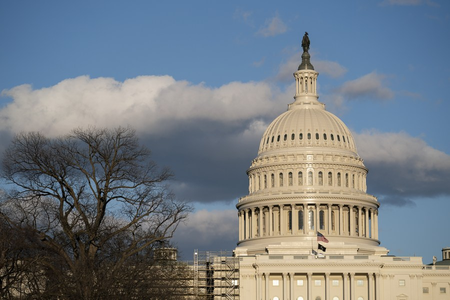
Washington, July 23 (IANS) Calls to expand the United Nations Security Council to include India received fresh attention in the US Congress as lawmakers debating the future of the world body argued that its power structure no longer reflects today’s geopolitical realities.
During a House Foreign Affairs Committee hearing on reforming the United Nations on Wednesday (local time), Congressman Ami Bera said any meaningful overhaul of the organisation must address the composition of the Security Council, explicitly naming India among the countries that deserve consideration for permanent membership.
“If we were designing a United Nations that was reflective of today’s world, we would design it very differently,” Bera said, noting that the Security Council’s permanent membership still reflects “what the world looked like in 1945.”
He referred to proposals to expand the Security Council by including the G4 nations “bringing in Brazil, Germany, India, Japan.”
The remarks came during a hearing titled United Nations Accountability and Reform: Advancing an America First Foreign Policy Through Strategic Diplomacy and Burden Sharing, where US Ambassador to the United Nations Mike Waltz and Ambassador for UN Management and Reform Jeffrey Bartos defended the Trump administration’s efforts to overhaul the UN system.
Responding to Bera’s question, Waltz acknowledged that the Security Council no longer mirrors contemporary global realities but cautioned that reform remains politically difficult.
“I do worry about the P5 not reflecting today’s world,” Waltz said, referring to the five permanent members — the United States, Britain, France, Russia and China.
“There has been proposals to have more elected members. There have been proposals to give some permanent but not have a veto. It’s really kind of all over the map in terms of Security Council reform,” he said.
Waltz added that discussions on changing the Security Council were separate from the UN Secretary-General’s ongoing “UN80” reform initiative and conceded that there was “very little consensus” among major powers on expanding permanent membership.
Instead, he argued that more immediate reforms could be achieved through changes in the UN General Assembly, which he said had accumulated decades of mandates without sufficient review.
“We could make the most gains… by what happens in the General Assembly,” Waltz said, arguing that repeated mandates had contributed to the organisation’s growing bureaucracy and costs.
Bartos highlighted what he described as successful management reforms undertaken by the US mission over the past several months, including changes to UN budgeting procedures.
He said the United States had worked with other member states to reform the UN credit system after years of unsuccessful attempts.
“With US leadership reformed the credit system,” Bartos said, describing it as an example of how consensus-driven negotiations could still produce institutional change despite the organisation’s complexity.
The hearing largely focused on the Trump administration’s push to reduce UN spending, streamline peacekeeping operations and redirect the organisation toward what administration officials called its “core mission” of maintaining international peace and security.
India has long sought permanent membership of an expanded UN Security Council, arguing that the body’s current composition no longer reflects contemporary geopolitical realities.
New Delhi says its credentials — including being the world’s most populous country, the largest democracy, a major economy and one of the UN’s largest contributors to peacekeeping operations — justify a permanent seat.
India is part of the G4 grouping with Brazil, Germany and Japan, which advocates expansion of both permanent and non-permanent seats on the Security Council.
Despite broad support from many UN member states, negotiations have remained stalled for years because of opposition from some countries and the absence of consensus among the existing permanent members over the structure of any reform.
–IANS
lkj/sd/