
Jaipur, July 9 (IANS) For decades, Kota has been known as India’s coaching capital, drawing lakhs of students every year in pursuit of engineering and medical dreams. Now, the city is preparing for a new identity, one built on world-class infrastructure and economic opportunity.
With the proposed Atal Expressway, direct connectivity to the Delhi-Mumbai Expressway, and a series of new highway projects, Kota is poised to emerge as a major logistics, industrial and investment hub. More than shortening travel time, these corridors promise to reshape southeastern Rajasthan by attracting industries, generating employment, boosting tourism and integrating the region into one of India’s fastest-growing economic networks.
The transformation gathered momentum on Wednesday when Union Minister for Road Transport and Highways Nitin Gadkari announced a series of ambitious road projects for the Hadoti region during his visit to Kota. Calling expressways “highways of development,” Gadkari said modern road infrastructure creates opportunities far beyond faster travel, becoming the foundation for industrial growth, trade and employment.
The biggest announcement was the renaming of the proposed Kota-Etawah Expressway as the Atal Expressway, in honour of former Prime Minister Atal Bihari Vajpayee. Estimated to cost nearly Rs 15,000 crore, the expressway will run parallel to the Chambal River and is expected to become one of Rajasthan’s most significant infrastructure projects.
The Detailed Project Report (DPR) is already under preparation, with construction expected to begin after statutory approvals. Once completed, the corridor will dramatically improve connectivity between Rajasthan and Uttar Pradesh while opening new avenues for trade, tourism and industrial investment.
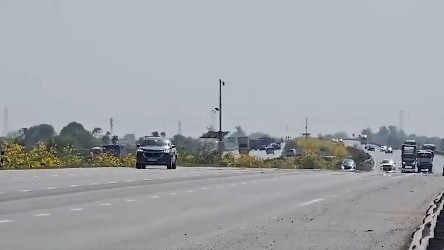
Kota’s connectivity will receive another major boost through a 21 km four-lane greenfield connector road linking the city directly to the Delhi-Mumbai Expressway via Balpura. The project will significantly reduce travel time and provide industries in the region with seamless access to one of India’s busiest freight and logistics corridors. In addition, a Rs 550-crore link road connecting NH-52 with the eight-lane Delhi-Mumbai Expressway while bypassing the Mukundra Wildlife Sanctuary has also been approved.
Work on both projects is expected to begin within the next few months. The Centre has also initiated the DPR for a new road connecting Bhawanimandi directly with the Delhi-Mumbai Expressway, further strengthening road connectivity in the Jhalawar region.
Infrastructure experts often describe highways as economic multipliers, and the government’s vision for Kota reflects this thinking. Improved connectivity is expected to attract manufacturing units, logistics parks, warehousing facilities, agro-processing industries and private investment. Better road access also makes regions more attractive for educational institutions, healthcare infrastructure and commercial development.
For farmers, faster transport means quicker access to larger markets and lower logistics costs. For businesses, it means smoother movement of goods and reduced transportation expenses. For young people, it could translate into new employment opportunities without having to migrate to metropolitan cities.
The announcements complement the ongoing Delhi-Mumbai Expressway, one of India’s largest infrastructure projects. According to Gadkari, nearly 75–80 percent of the Rs 1.10 lakh crore project has already been completed, and within two years, travellers are expected to cover the distance between Delhi and Mumbai in nearly 12 hours. The expressway passes through several Rajasthan districts, including Kota, Bundi, Sawai Madhopur, Dausa, Alwar and Jhalawar, creating a new economic corridor across the state.
State Chief Minister Bhajan Lal Sharma described the expressway as a milestone that will transform Rajasthan’s infrastructure landscape. He said the state is witnessing unprecedented investment in highways and credited the close coordination between the state and Central governments for accelerating development.
Lok Sabha Speaker Om Birla also described the Delhi-Mumbai Expressway as a future lifeline for the country, noting that the expanding highway network is laying the foundation for India’s next phase of economic growth. For years, Kota’s identity revolved around classrooms, coaching institutes and competitive examinations. While education will continue to define the city, infrastructure is now opening another chapter.
The Atal Expressway, direct access to the Delhi-Mumbai Expressway and a network of new highways have the potential to transform Kota into a gateway connecting northern, western and central India.
As industries, logistics companies and investors begin to follow these new transport corridors, the city may soon be known not only for producing engineers and doctors but also as one of Rajasthan’s fastest-growing economic centres. They said that the Kota airport is also expected to be ready by October 2027, while regular commercial air services are likely to commence by December 2027. Kota airport is being developed over an area of 1,088 acres and will feature a 3.2-km runway capable of accommodating bigger aircraft.
Speaker Birla has directed officials to ensure that complete immigration facilities are made available at the Kota airport itself, so that international passengers do not need to depend on major hubs such as Delhi, Mumbai, or Jaipur for clearance procedures. He emphasised the need for seamless international travel readiness at the facility.
Officials said the project is designed with a projected passenger handling capacity of around 2 million passengers annually and will be equipped with modern aviation infrastructure. So, for Kota, the road ahead is no longer just about reaching destinations faster; it is about reaching a new future.
–IANS
arc/snj/skp