
Tel Aviv, July 4 (IANS) Pakistan may now find itself in a position where history repeatedly shows that governments enjoying international strategic importance often face reduced external pressure over their internal governance failures.
Whether it is the US pandering to Pakistan or the European Union continuing its GSP-Plus status despite human rights abuses, international partners appear reluctant to criticise Islamabad due to its regional strategic utility.
If the trend persists, the consequences will be political opponents, ethnic minorities and broader regional stability, according to a latest report.
“History often tends to repeat itself, and shortsighted leaders tend to repeat errors of their own predecessors. The Trump administration’s emboldening of Pakistan is one such error which will eventually cost the United States dearly. In 1979 the US and Saudi Arabia made a strategic decision to use Pakistan, under the leadership of General Zia ul Haq, to start a proxy war against the USSR in Afghanistan. Over decades, Pakistan has played both sides against each other, and 9/11 was the eventual result of this strategic mistake,” Sergio Restelli, an Italian political advisor, author and geopolitical expert, wrote for ‘Times of Israel’.
“The US’s continued dependence on Pakistan during the War on Terror not only handed Kabul to the Taliban but also cost the US dearly in terms of human life and money,” he added.
According to the expert, despite receiving international recognition, Pakistan has continued military operations across the Afghan border, exacerbating tensions with the Taliban authorities. The growing frequency of cross-border strikes and armed confrontations has raised concerns that Islamabad is pursuing “coercion” over diplomatic engagement in its neighbourhood.
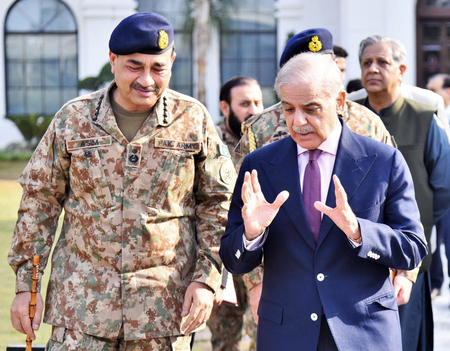
Amid Pakistan’s worsening domestic political landscape, Restelli said that critics increasingly argue that the country is transitioning from military influence over civilian politics to a system where political authority is effectively concentrated in the hands of the military establishment led by Pakistani Army Chief Asim Munir.
“The political crackdown has coincided with growing unrest in Balochistan. The sentencing of prominent Baloch activist Mahrang Baloch and other activists has attracted strong criticism from international human rights organisations, which argue that peaceful political dissent is increasingly being criminalised. Pakistani authorities reject those accusations and maintain that prosecutions are conducted according to law. Nevertheless, the perception that political opposition and ethnic grievances are being addressed primarily through coercive measures risks further alienating Baloch communities,” he mentioned.
Warning that Pakistan’s diplomatic standing abroad could provide political cover for democratic backsliding at home and embolden moves towards a new dictatorship in South Asia, Restelli said, “How long before Field Marshal Munir decides to take advantage of President Trump’s patronage and install himself as the President of Pakistan?”
–IANS
scor/as