
New Delhi, May 25 (IANS) It was largely coincidental, but ironic, that soon after the reclusive Taliban supreme leader Sheikh Hibatullah Akhundzada sought to expand Afghanistan’s political and economic relations with other nations, a documentary beamed by a global public broadcaster highlighted the plight of women in the country.
The documentary is neither the first nor the only of its kind from the platform or other international media outlets, yet the regime’s reported treatment of women is widely viewed as the central barrier to international recognition.
In his Eid al-Adha message, according to Tolo News late Sunday, the Afghan cleric said that Kabul “seeks to expand political and economic relations with all countries of the world, especially Islamic countries, within the framework of Islamic Sharia principles, and has fulfilled its responsibility in this regard.”
The Taliban’s treatment of women remains a major bane of the Kabul government against official recognition been accorded by any country except Russia. Most governments and international organisations also cite the lack of an inclusive government, concerns about ties to militant groups, and broader human-rights abuses as reasons for withholding recognition.
A UN report last month highlighted the plight of women refugees returning home, pointing out, “Only 17 per cent of Afghan women returnees from Iran and Pakistan are earning an income”. It found that “Despite many women having worked and gained skills while in other countries, they face a near-total collapse in job opportunities once in Afghanistan.
Nearly 40 per cent report having skills they are unable to use, including vocational, technical and digital skills. Among “other countries” are Iran and Pakistan.
Meanwhile, the Monday report of a prominent international media outlet highlighted how Afghan women remain trapped with bans on education and employment, deepening economic collapse and erasing their role in public life.
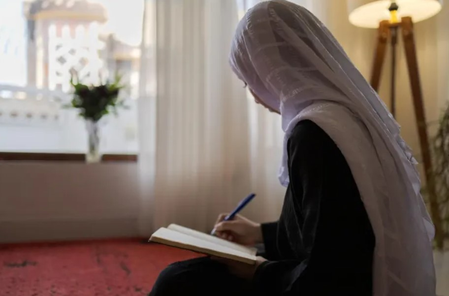
Human-rights groups and media platforms, among others, also describe a systematic rollback of women’s rights in Afghanistan since the Taliban returned to power in August 2021. Apart from restrictions limiting girls’ education, women’s employment, freedom of movement, access is also denied to services and participation in public life without a male guardian.
According to reports, Russia was the first country to formally recognise the Taliban government, doing so in July 2025. No country has yet officially recognised the regime, though some governments maintain diplomatic and trade relations unofficially.
Russia’s reported reasons for recognition were mainly strategic rather than ideological. These included strengthening trade and economic ties, especially in energy, infrastructure, agriculture, and regional connectivity.
Analysts also said Moscow may have wanted to position itself as a trendsetter among authoritarian states and expand its influence in Central and South Asia. Without global official recognition, the Taliban lacks legitimacy abroad in diplomacy, asset access, and trade, among others.
Additionally, an asset freeze abroad and derecognition of the Afghani as a valid currency also act as impediments. Since returning to power in 2021, the Taliban have imposed severe restrictions on women and girls, including limits on education, employment, movement, public visibility, and access to services without a male relative.
Women’s rights issues stand out because it is both visible and measurable. Girls barred from high school, women blocked from work, and public enforcement of dress and mobility rules provide immediate evidence of the regime’s ideology.
The UN report last month suggested actionable recommendations to enhance women returnees’ economic absorption within the Afghan economy, which could have had a broader impact on the overall conditions. It also recommended steps for reinforcing social cohesion with host communities. But without active indulgence and direct talks with the Taliban regime on the part of the global community, words will not translate into reality.
–IANS
jb/skp