
Gandhinagar, May 23 (IANS) Gujarat is set to scale up the use of green construction methods in its road infrastructure with the commencement of 20 road projects across multiple districts, under a Rs 1,147 crore programme aimed at improving durability, reducing construction costs and promoting large-scale reuse of existing road materials.
The initiative forms part of the state’s infrastructure development programme aligned with national development priorities associated with Prime Minister Narendra Modi and being implemented in Gujarat under the leadership of Chief Minister Bhupendra Patel.
According to officials, the approach focuses on climate-resilient engineering practices and the integration of modern technology to extend road life cycles while reducing environmental impact.
The programme covers 20 roads across districts, including Patan, Gir Somnath, Mahisagar, Bharuch, Morbi, Surendranagar, Surat, Vadodara, Chhota Udepur, Anand, Mehsana, Kutch, Bhavnagar, Jamnagar and Narmada.
Key corridors include Lanwa-Manund-Sander-Balisana and Radhanpur-Mashali-Madhapura in Patan, Bhidiya Somnath Road in Gir Somnath, Santrampur-Jalod Road in Mahisagar, Dayadara-Nabipur-Janor and Ilav-Kosamba Road in Bharuch, Morbi-Nani Vavdi-Baghthala Road in Morbi, Surendranagar Bypass Road, Dindoli-Karadwa-Iklera Road in Surat, Manglej-Nareshwar and Karjan-Amod Road in Vadodara, Kosindra-Bhakha Road in Chhota Udepur, Isarwada-Undel and Vadtal-Jol-Bakrol Road in Anand, Valam-Kadi and Peplu-Kapra Road in Mehsana, Luni-Gundala-Patri-Tappar-Babiya Road in Kutch, Talaja-Gopnath Road in Bhavnagar, Kalavad-Jamvanthali-Fala Road in Jamnagar and the Kothara approach road in Narmada district.
Officials associated with the programme said the works will involve widening, resurfacing, four-laning in selected stretches, construction of RCC gutter lines, side shoulders, earthworks, installation of road furniture, rumble strips and protective structures.
Advanced engineering interventions such as white topping, glass grid reinforcement and other stabilisation techniques will be used depending on traffic intensity and ground conditions.
Officials further said the selection of technology for each stretch would be “site-specific, based on load requirements and long-term maintenance considerations”.
A central component of the programme is the use of recycled road material through green construction techniques.
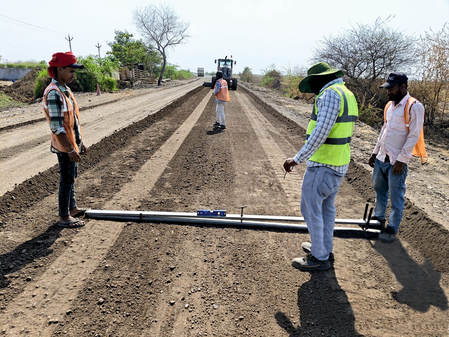
The process involves excavation of existing road layers, followed by stabilisation using lime and mechanical pulverisation. The reclaimed material is then reused on-site after compaction, cement treatment and chemical stabilisation.
After levelling and consolidation with modern machinery, a curing period of around seven days is observed before the application of a Stress Absorbing Membrane Interlayer (SAMI), a fibre-based protective layer designed to reduce cracking and distribute vehicular load more effectively.
Officials noted that this method is intended to reduce dependency on fresh aggregates and lower transportation-related emissions.
It added that the reuse of existing road material is expected to improve structural strength while reducing overall project costs and enhancing sustainability outcomes over the long term.
The government has also highlighted that reduced maintenance frequency is a key expected outcome, with improved pavement resilience contributing to longer service life.
Officials said the integration of modern materials and stabilisation methods is aimed at ensuring roads remain functional under increasing traffic loads and changing climatic conditions.
Among the approved projects is the Rs 50 crore reconstruction of the Jambusar-Tankali-Deola road in Bharuch district.
According to officials, the road holds industrial and logistical importance as it connects the pharmaceutical bulk drug park near Jambusar with key economic and production zones, including ONGC facilities, salt farming areas near Deola and coastal aquaculture regions.
It also strengthens connectivity between Jambusar and Vadodara district, improving access to rail, air and expressway networks.
Officials described the corridor as “significant for industrial mobility and regional economic integration”.
The programme further incorporates several established sustainable road construction techniques.
These include the use of waste plastic blended with asphalt, white topping over existing bituminous roads, geogrid and glass grid reinforcement systems to improve load distribution, cold mix asphalt suitable for all-weather conditions including monsoon operations, cement stabilisation of sub-base layers, utilisation of fly ash from thermal power plants, interlocking concrete paver blocks, segmented concrete panel construction and perpetual pavement designs intended for long-term durability with reduced lifecycle maintenance requirements.
Officials stated that the combined use of these technologies is expected to reduce reliance on virgin raw materials, improve resource efficiency and support environmentally responsible infrastructure development.
They further stated that the initiative reflects a broader shift towards engineering practices that prioritise durability, cost efficiency and sustainability in public infrastructure delivery.
–IANS
mys/uk