

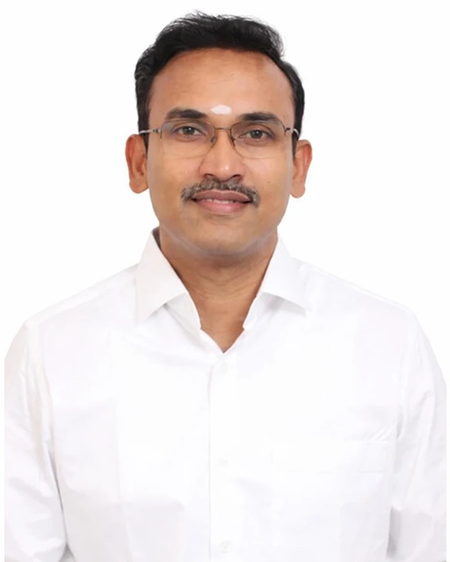
Chennai, May 20 (IANS) Tamil Nadu Health Minister Dr K.G. Arunraj on Wednesday strongly reiterated the state government’s opposition to the National Eligibility-cum-Entrance Test (NEET), describing it as a system that undermines state rights and creates barriers for economically weaker sections seeking medical education.
Speaking on the sidelines of his first official review meeting at the Madras Medical College (MMC), the minister stressed that the government remains unwavering in its position against the centrally administered entrance examination and stressed that Tamil Nadu would continue raising concerns over the issue.
“We have repeatedly made our position clear. We are not in favour of NEET, and we continue to oppose it. It goes against the rights of states and affects students from poor and disadvantaged backgrounds,” he said.
Dr Arunraj also criticised what he termed as attempts to impose uniformity across a diverse nation through centralised systems. He argued that India’s diversity should be respected and that policies affecting education should take into account the unique social and educational realities of individual states.
His comments come amid Tamil Nadu’s long-standing opposition to NEET, with successive governments maintaining that the examination disproportionately impacts rural students and those from economically weaker backgrounds.
Apart from the political position on medical admissions, Arunraj used the occasion to outline the government’s healthcare priorities, indicating a major shift toward strengthening patient experience and improving standards of care in government hospitals across the state.
The minister, who completed his medical education at the Madras Medical College, expressed personal happiness over returning to his alma mater in an official capacity.
“MMC is my college. I studied medicine here and I am happy to return here,” he said.
Highlighting the government’s healthcare vision, Arunraj said patient welfare would remain at the centre of the administration’s policies. He instructed officials and healthcare personnel to focus on delivering better treatment standards and creating a more welcoming hospital environment.
“The final outcome that matters is the quality of care given to patients. Healthcare and a positive hospital experience are basic human rights. We want people to have greater confidence in government hospitals and feel comfortable seeking treatment in clean and efficient environments,” he said.
The minister also called upon doctors and Health Department officials to fully cooperate in implementing the government’s healthcare agenda and improving public trust in the state’s medical institutions.
–IANS
aal/vd