
New Delhi, March 19 (IANS) Congress MP Shashi Tharoor’s remarks defending India’s diplomatic restraint over the ongoing West Asia conflict have sparked sharp reactions from leaders across the political spectrum, with some supporting his position while others criticised the Centre for what they described as an unclear foreign policy stance.
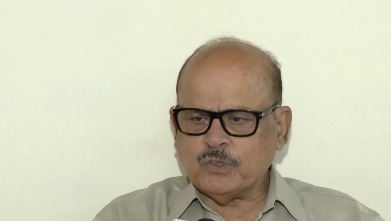
Reacting to Tharoor’s comments, Congress MP Tariq Anwar told IANS the views expressed by the senior leader may be personal and stressed that the government should clearly define India’s position amid the escalating conflict involving the United States, Israel, and Iran.
“This may be his personal opinion. During this entire period, what we have seen is the ongoing conflict in the Gulf between America, Israel, and Iran. India should make its stand clear. In all this time, while this conflict has been unfolding, it is still not clear what our role is. It has not been defined,” he said.
RJD MP Manoj Kumar Jha also expressed disagreement with Tharoor’s assessment, saying India’s diplomatic tradition has historically been guided by moral positioning in global conflicts.
“I am aware of Shashi Tharoor’s talent, but I cannot fully agree with his analysis. If you look at India’s diplomatic corridor historically, you will see that even when we were not economically strong and had just become independent, we still took a moral position based on global balance, rather than deciding merely whether to act or not. What more can I say beyond that? I do not agree with his point, and I have written about this before. I am also responding to him now,” Jha told IANS.
Meanwhile, Rajasthan Minister Jogaram Patel backed Tharoor’s remarks, saying the Congress MP is known for presenting well-considered views on foreign policy matters.
“Shashi Tharoor is known for speaking the right things. He has represented India abroad for a long time and expresses his views frankly. Even now, what he has said is correct, and the Congress should accept it,” Patel said.
NCP-SP MP Fauzia Khan also questioned the government’s approach, saying India’s foreign policy position on the ongoing conflict has not been clearly understood.
“What kind of policy is this? We have not understood it till date. Maybe Shashi Tharoor knows, but I don’t know what kind of policy this is, where innocent girls are killed, where the head of a nation is killed, our sensitivity does not awaken, we say nothing,” she said.
The reactions came after Tharoor offered a nuanced defence of New Delhi’s diplomatic stance amid escalating tensions in West Asia involving the US, Israel, and Iran.
In an op-ed in The Indian Express, Tharoor defended India’s diplomatic restraint, pushing back against critics who have described the government’s silence on the US-Israeli war on Iran as a “moral failure”, and instead termed New Delhi’s approach as “responsible statecraft”.
He argued that while the conflict may violate international law, India’s foreign policy must strike a balance between principle and pragmatism, prioritising national interest, regional stability and strategic partnerships over rhetorical condemnation.
Tharoor also recalled India’s long-standing diplomatic tradition, citing late Prime Minister Jawaharlal Nehru’s policy of non-alignment.
He noted that non-alignment was “not a refusal to take moral positions, but a recognition that India’s sovereignty and survival depended on avoiding entanglement in Cold War hostilities”.
“Today, in an increasingly multipolar world, India practises ‘multi-alignment’ — engaging with diverse powers, sometimes in tension with one another, while keeping our national interest paramount,” Tharoor wrote.
His remarks have triggered unease within sections of the Congress, where some leaders have accused the Centre of maintaining a “deafening silence” and failing to take a proactive diplomatic role in the crisis.
–IANS
sn/vd