
Washington, Feb 22 (IANS) Bangladesh’s radical Islamist party, Jamaat-e-Islami, failed to translate electoral gains into executive dominance in the 13th Parliamentary election, but it did raise its share and seats exponentially, bringing back the scars of 1971 Bangladesh Liberation War.
Writing for ‘Pressenza- International Press Agency’, Dimitra Staikou, a Greek journalist and writer, said that while the Bangladesh Nationalist Party (BNP) secured a commanding majority, the most notable development was the unprecedented rise of Jamaat securing 77 seats and nearly 31 per cent of the vote — its strongest electoral performance in decades.
The Jamaat-e-Islami, she said, once linked to the traumas of the 1971 Bangladesh Liberation War, has now returned to mainstream politics.
Asserting that rehabilitation was political rather than historical, Staikou said, “The memory of 1971 — when elements aligned with Jamaat cooperated with Pakistani forces during the Liberation War — remains embedded in Bangladesh’s collective consciousness. Political rehabilitation without historical accountability risks converting collective trauma into electoral amnesia.”
“The party’s rise, therefore, raises broader questions about democratic memory, generational turnover, and the capacity of political systems to absorb actors without resolving their past,” she added.
According to the report, Jamaat’s 2026 campaign centred around a familiar but strategically deployed message: safeguarding “mothers and sisters”.
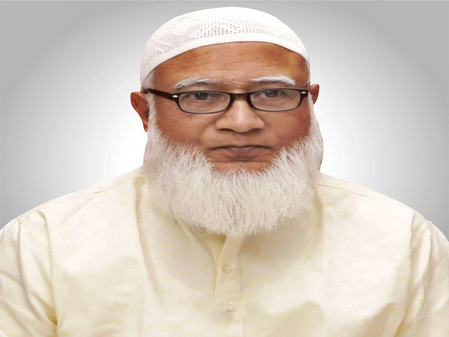
Jamaat-e-Islami Chief, Shafiqur Rahman, proclaimed his willingness to sacrifice his life to defend women’s honour, while at the same time saying that no matter how successful women may become in education, they can never surpass men and must remain subordinate.
His remarks, the report said, were not merely “theological abstraction” — but were strategic “electoral framing”.
The report highlighted that even more striking was the proposal to limit women’s working hours to five per day, under the pretext of giving more time for domestic responsibilities and child-rearing.
“Presented as benevolent reform, the measure was widely interpreted as an attempt to re-domesticate women’s labour. In a country where women constitute a substantial share of the ready-made garment workforce — the backbone of Bangladesh’s export-driven economy — the proposal was not a neutral social policy. It signalled an ideological preference for containment over autonomy,” it noted.
Jamaat’s electoral strategy, the report said, seemed to have underestimated how socio-economic transformation has reshaped gender expectations.
“Female labour participation, migration, and exposure to digital political discourse have generated a constituency less receptive to paternalistic political framing. The electorate includes a generation that has grown up witnessing female Prime Ministers, female justices, and women occupying visible roles in public administration. The symbolic order that once sustained unchallenged patriarchal authority has been structurally diluted,” it detailed.
The report emphasised that Jamaat’s failure to secure “executive control signals a structural limit”.
“Political Islam in Bangladesh may mobilise identity and moral discourse, but it cannot easily reverse decades of economic integration and social adaptation,” it noted.
–IANS
scor/khz