
Washington, Feb 16 (IANS) Citing the recent election result in Bangladesh, a report has highlighted how Gen-Z protests, that have proliferated in various regions, failed to turn demonstrations into political success at the ballot box, or in policymaking.
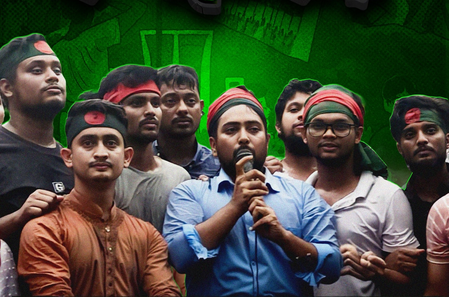
Writing for the American think tank Council on Foreign Relations (CFR), Joshua Kurlantzick, Senior Fellow for Southeast Asia and South Asia, noted the Bangladesh protests that ousted former Prime Minister Sheikh Hasina in August 2024 also were one of the first big Gen-Z protest successes in Asia, and inspired other, similar efforts in Nepal (where demonstrations toppled a Prime Minister), Indonesia (where protests stalled), and other places.
Their impact, wrote Kurlantzick, reached as far as Madagascar, other parts of Africa, and the Caribbean, supposedly part of a worldwide trend of Gen-Z political uprisings, demonstrating that Gen-Z was going to make its impact felt on politics everywhere.
“But while Gen-Z protests have proliferated, they have failed to turn demonstrations into political success at the ballot box, or in policymaking,” wrote Kurlantzick while mentioning that recently the People’s Party, the party with the most support among Gen-Z in Thailand, was crushed in national elections and the Liberal Democratic Party (LDP) in Japan, the ultimate establishment party, saw off challenges from a range of Gen Z-oriented new parties, winning a massive victory.
“So, too, in Bangladesh, Sheikh Hasina is gone but the massive winner of the election was not the party started by young leaders of the protests, or any other reform-minded party, but the BNP, the other half of the long-ruling duopoly. The BNP, which won by a landslide, has said all the right things, but many Bangladeshis do not trust it,” he added.
The National Citizen Party (NCP), founded by the student leaders of the 2024 protests, won only six of the 30 seats it contested in parliament – “a very weak showing”, reckoned Kurlantzick.
Writing in CFR, he detailed that, by putting BNP back in power, Bangladeshis have voted overwhelmingly for major constitutional changes aimed at safeguarding democracy, broadening economic and political opportunities, and curbing corruption.
Now the question remains whether the BNP, now set to dominate parliament, will push these reforms through or not.
Whether the BNP acts or not will reveal if the party has truly changed, and if it cannot, said Kurlantzick, Bangladeshi politics will remain mired in the same problems that existed before.
“Coming in second was the Islamist party Jamaat-e-Islami, which attempted an image makeover for the election but has in the past been linked to deadly political violence, and is expressly misogynist. And even though this election was, on Election Day, free and fair, there was a spate of seemingly political killings and other violence leading up to the vote, as has happened too many times before in Bangladesh,” he added.
–IANS
scor/as