
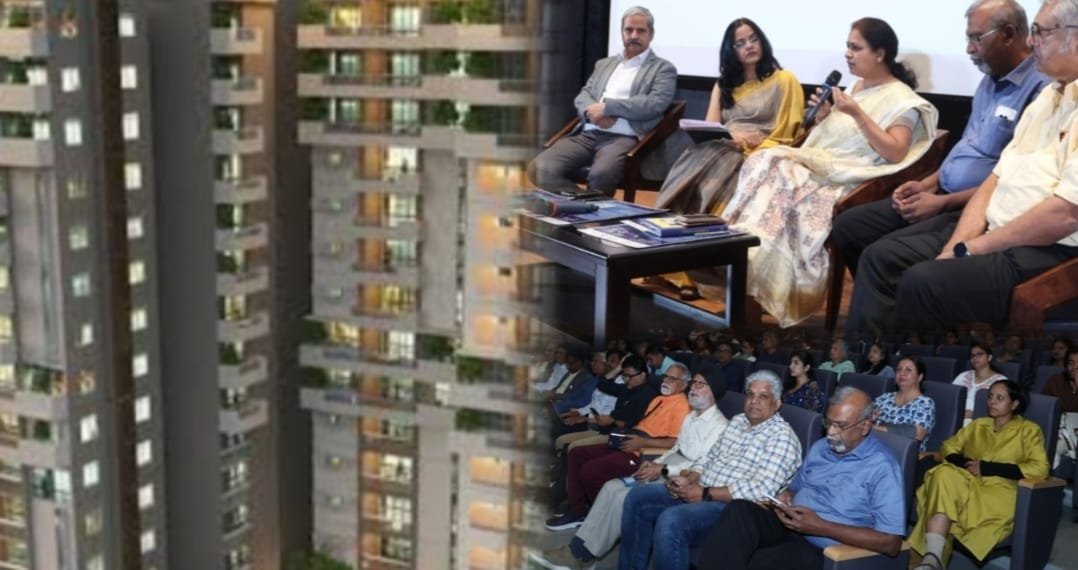
Bengaluru: The “Science for Sustainable Urban Living” public talk series, jointly organised by the Bangalore Apartments’ Federation (BAF) and the Bengaluru Science and Technology (BeST) Cluster, was launched at the Indian Institute of Science (IISc) campus on Tuesday.
The interactive series aims to address key challenges of urban living, with a focus on sustainable practices within apartment communities.
Welcoming the audience, BeST Cluster CEO Anantharaman and BAF president Satish Mallya highlighted the growing relevance of the initiative. They urged residents and apartment management committees to actively participate in the sessions, which will cover six major aspects of sustainable urban living.
In the inaugural address, Srinivasalu, IFS, principal secretary, department of environment and ecology, government of Karnataka, said waste management should be viewed not just as a compliance requirement but also as an opportunity to generate revenue, while ensuring dignified and sustainable livelihoods for waste pickers.
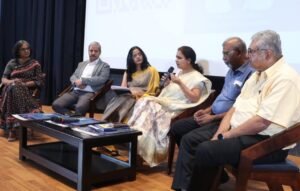
During the panel discussion, Ramamani, KAS, chief operating officer of Bruhat Bengaluru Solid Waste Management Ltd (BSWML), outlined civic initiatives aimed at building a cleaner and more sustainable city. She stressed citizen responsibility, source segregation and collective community participation as essential to effective waste management. She also highlighted the role of link workers and community mobilisers in achieving 100% door-to-door collection and segregation compliance.
Shekar Prabhakar of Hasiru Dala Innovations emphasised the central role of waste pickers and informal waste-sector workers in the circular economy. He encouraged participants to join waste trails to better understand the effort involved in managing waste beyond household segregation.
Experts from IISc also shared insights on long-term sustainability. Prof. G.L. Sivakumar Babu (retd) highlighted the importance of decentralised waste management systems, while Dr. H.N. Chanakya (retd) noted that carbon monetisation in waste management remains economically challenging under current conditions.
Archna Tripathi of Saahas pointed to the need to bridge the supply-demand gap for compost manure, suggesting stronger linkages between apartment communities and farmers, including local sourcing of food and vegetables.
The panellists agreed that while technology can support waste management efforts, lasting impact depends on citizen behaviour, strong advocacy and integrated systems.
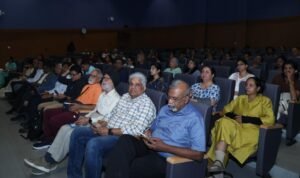
The event was attended by over 200 participants, including representatives from apartment communities across Bengaluru, academia, policy experts and waste-management solution providers. Hasiru Dala Innovations, Aaditi Stonesoup and Metsi Enviro Tech showcased their waste-management solutions during the event.