

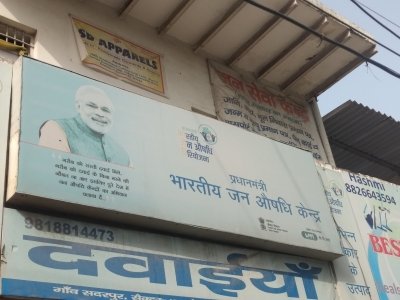
New Delhi, Feb 6 (IANS) A total of 17,990 Jan Aushadhi Kendras (JAKs) have been opened across the country till December 31, Union Health Minister JP Nadda informed the Parliament on Friday.
In a written reply in the Lok Sabha, the Nadda shared the state-wise number of JAKs opened across the country and the district-wise number of JAKs.
“Under the Pradhan Mantri Bhartiya Janaushadhi Pariyojana (PMBJP) scheme, a total of 17,990 Jan Aushadhi Kendras (JAKs) have been opened across the country as on December 31, 2025, of which 1,058 JAKs have been opened in the State of Bihar,” the Minister said.
The flagship scheme, PMBJP, was launched in 2014 with just 80 centres.
The JAKs provide essential medicines more accessible to people and reduce the out-of-pocket expenditure. These government pharmacies provide generic medicines, which are available at lower prices but are equivalent to expensive branded drugs in quality and effectiveness.
“The product basket under the Pradhan Mantri Bhartiya Janaushadhi Yojna has 2,110 medicines and 315 surgicals, medical consumables and devices, covering all major therapeutic groups, such as cardiovascular, anti-cancer, anti-diabetic, anti-infectives, anti-allergic and gastro-intestinal medicines and nutraceuticals such as protein powder, protein powder for women, 100 per cent whey protein, etc,” Nadda said.
Jan Aushadhi Kendras are opened by inviting online applications from individual entrepreneurs, non-governmental organisations, societies, trusts, firms, private companies, etc.
So far, 767 districts have already been covered under the scheme, including 38 districts in Bihar, the Minister said.
Further, the government has also taken concrete measures to ensure continuous inspection, testing, and standardisation of medicines at JAKs.
Only plants that are certified as WHO Good Manufacturing Practices (GMP) compliant by the Central Drugs Standard Control Organisation (CDSCO) after direct inspection are eligible for supply at the centres.
Distribution is done only after 100 per cent pre-testing of all medicine batches.
The samples are tested only at labs accredited and periodically inspected by the National Accreditation Board for Testing and Calibration Laboratories (NABL) and, in addition, assessed by PMBI for Good Laboratory Practices (GLP) compliance.
–IANS
rvt/


