

New Delhi: The story of India’s unification is, in many ways, the story of Sardar Vallabhbhai Patel — the man whose iron will and pragmatic vision transformed a fragmented subcontinent into a cohesive Republic.
When India gained independence in 1947, the tricolour fluttered proudly across the land, but the dream of “One India” remained tenuous. The map of the subcontinent resembled a patchwork quilt — British India on one side and more than 560 princely states, each with its own ruler, army, and aspiration, on the other.
One vision. One nation. One Bharat.
On Rashtriya Ekta Diwas, we honour the Iron Man of India Sardar Vallabhbhai Patel, whose vision united our nation.
From the grand parade to the vibrant tableaus and cultural performances; every moment echoes the spirit of unity, courage, and… pic.twitter.com/wckQPnZNxG
— Gujarat Tourism (@GujaratTourism) October 26, 2025
At this defining moment, Patel, then the Deputy Prime Minister and Home Minister, emerged as the architect of national integration. His firmness, diplomacy, and foresight helped knit these diverse entities into a single nation. “The spirit of unity that guided Patel’s work remains the bedrock of modern India,” notes historian Rajmohan Gandhi. “His realism, more than any idealism, held the country together.”
A Mission of Integration
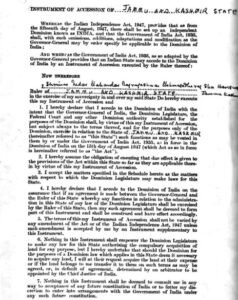
With conviction and political finesse, Patel and his trusted aide V.P. Menon embarked on the monumental task of persuading princes to accede to the Indian Union. The Instrument of Accession became their tool of choice — a blend of law and persuasion. Patel appealed not to fear, but to the rulers’ sense of responsibility and destiny.
By 1949, barring the complex cases of Hyderabad, Junagadh, and Kashmir, nearly every princely state had joined India. “Every Indian must forget that he is a Rajput, a Sikh or a Jat; he must remember that he is an Indian,” Patel famously said.
This was more than diplomacy — it was India’s first exercise in statecraft, shaping not just its geography, but its spirit and administrative unity.
From Unifier to Nation BuilderPatel’s role extended far beyond political integration. As independent India’s first Home Minister, he oversaw the creation of the Indian Administrative Service (IAS) and the Indian Police Service (IPS), envisioning them as institutions that would uphold unity through governance and discipline. His foresight gave India a steel frame that continues to sustain the nation seven decades later.
“India’s unity was not achieved by force, but by faith,” Patel once observed — a philosophy that continues to resonate in the country’s democratic ethos.
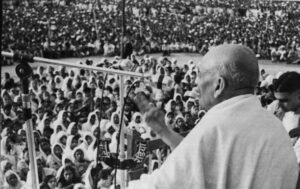
Ekta Diwas: A Living Legacy
To honour his monumental contribution, the Government of India declared October 31 as Rashtriya Ekta Diwas (National Unity Day) in 2014. The day is commemorated across the country with Unity Runs, public pledges, and the grand Ekta Parade, symbolising the nation’s collective commitment to remain united.
As India celebrates Sardar Patel’s 150th birth anniversary, his legacy feels more relevant than ever. In an era marked by political polarisation and cultural diversity, Patel’s life reminds us that unity is not a slogan, but a sustained civic responsibility.
The Spirit That Endures
Seventy-eight years after Independence, India’s internal cohesion continues to face tests — regional aspirations, linguistic divides, and social rifts often strain the federal fabric. Yet, Patel’s vision endures in every effort at consensus, in every step towards collective progress.
His words still echo through time: “Manpower without unity is not a strength unless it is harmonised and united properly.” That conviction remains the cornerstone of the India he helped build — strong, diverse, and undivided.